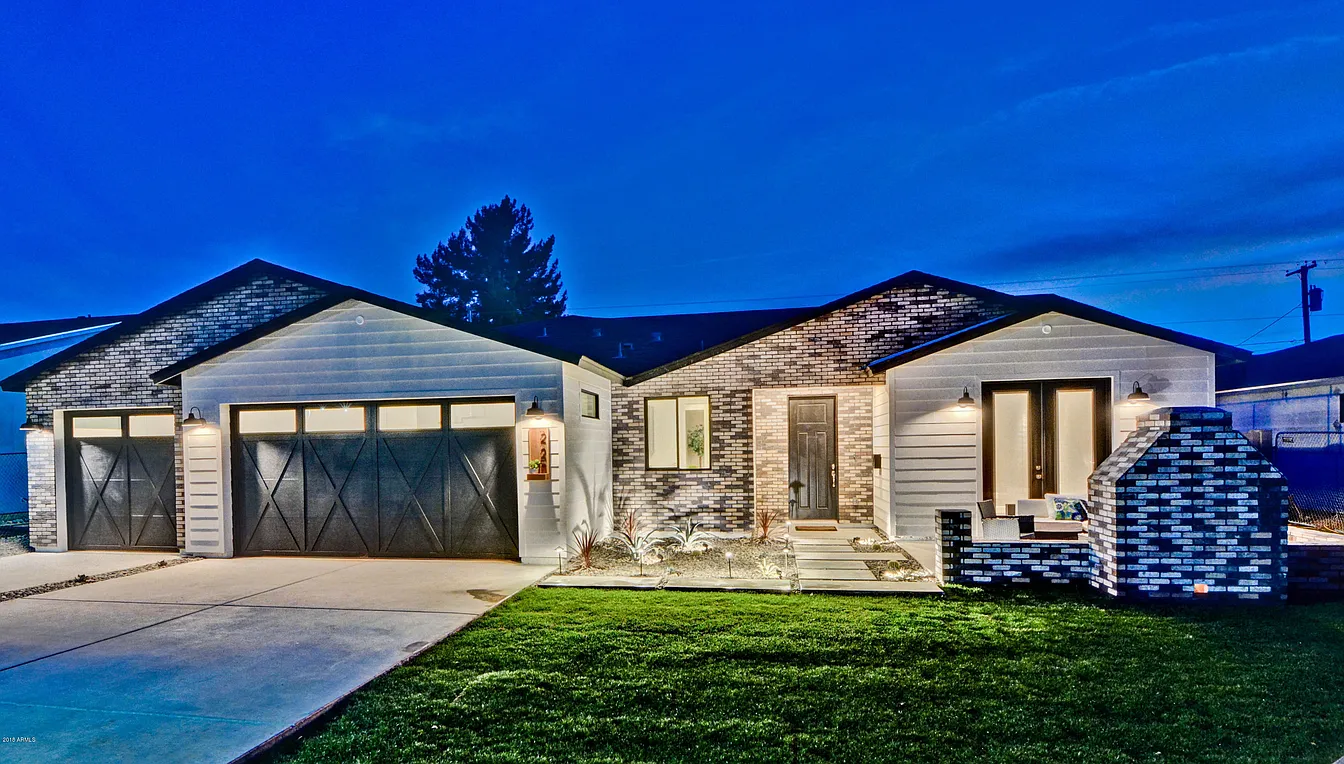

Blue Sky Homes helps homeowners across Scottsdale, Paradise Valley, and Arcadia work through this exact calculation when considering net zero home design for their projects.
Here’s a practical breakdown to help you decide whether net zero makes sense for your home.
The Upfront Investment
Net zero construction typically requires two major areas of additional upfront investment: a more rigorous building envelope, including enhanced insulation and air sealing, and a solar system sized around the home’s projected annual energy use.
Both categories add cost during construction, and understanding this investment clearly from the outset is essential to making an informed decision.
When evaluating Net Zero Home Cost and Savings Phoenix homeowners should look beyond the solar array alone. Reducing the home’s energy demand first can help limit how much renewable generation is needed to approach net zero performance.
The Ongoing Savings
A net zero home is designed so that, over the course of a year, renewable energy generation can offset the home’s annual energy consumption.
That can substantially reduce purchased electricity, although actual utility bills may still include fixed charges, minimum charges, taxes, or other fees depending on the utility and rate plan.
In Phoenix’s cooling-intensive climate, improvements to insulation, air sealing, HVAC efficiency, windows, and solar control can play a major role in reducing the amount of electricity the home requires.
How Long Until the Investment Pays Off
The timeline for recovering the additional upfront investment depends on factors such as utility rates, solar system cost, household energy use, financing, available incentives, and the efficiency of the home itself.
Homeowners planning to stay in their home for many years may have more time to benefit from lower operating costs than those expecting a shorter ownership period.
This is why Net Zero Home Cost and Savings Phoenix calculations should be based on the specific home rather than a generic industry payback estimate.
Factors That Improve the Return on Investment
Phoenix’s strong solar resource can make rooftop solar an important part of a net zero strategy. At the same time, reducing energy demand before sizing the solar system can improve overall project efficiency.
That means prioritizing insulation, air sealing, efficient windows, thoughtful orientation, and correctly sized mechanical systems before determining how much solar capacity is needed.
For homeowners considering green building certification Arizona programs as well, these same building-performance fundamentals may support broader sustainability and verification goals.
Factors That Can Extend the Payback Period
Utility rate structures can materially affect the economics of a solar-powered home. How excess solar generation is credited, when electricity is consumed, and whether time-of-use pricing applies can all influence actual savings.
Homeowners should review the current policies of their specific electric utility before relying on projected savings.
The U.S. Department of Energy’s solar guidance recommends evaluating household electricity use, solar potential, system options, and applicable utility requirements when planning residential solar.
Anyone evaluating green building certification Arizona alongside net zero performance should also account for any testing, documentation, or verification costs associated with the selected certification program.
Beyond the Financial Calculation
Some homeowners pursue net zero performance for reasons beyond simple financial payback, including a desire to reduce household energy consumption, lower environmental impact, or produce more of their own electricity.
Those priorities are legitimate parts of the decision even when the shortest possible payback period is not the homeowner’s only goal.
The Department of Energy’s Zero Energy Ready Home program also emphasizes high-performance construction designed to achieve strong efficiency before renewable energy is considered.
For homeowners researching green building certification Arizona options, this distinction matters: certification and net zero performance may overlap, but they are not automatically the same goal.
A Middle Path Worth Considering
For homeowners uncertain about committing to a fully net zero design, applying the same building science fundamentals, high-performance insulation, air sealing, efficient windows, and correctly sized HVAC systems, without necessarily sizing solar for full annual offset, can still deliver meaningful energy savings at a lower upfront investment.
This approach allows homeowners to strengthen the home’s underlying performance first and potentially expand renewable energy later.
It can also make sense for homeowners considering green building certification Arizona standards but who do not necessarily need full net zero performance to meet their sustainability goals.
How Blue Sky Homes Helps You Run the Numbers
Blue Sky Homes works with homeowners considering net zero construction to model the specific costs and projected performance of their particular home and lot, providing a clearer picture than broad industry estimates can offer.
A useful Net Zero Home Cost and Savings Phoenix analysis should consider the home’s size, orientation, envelope performance, HVAC design, projected energy demand, solar capacity, and applicable utility structure together.
That gives homeowners a more realistic basis for deciding how far they want to take their energy-performance goals.
Why This Decision Doesn’t Need to Be All or Nothing
Whether you choose a fully net-zero design or prioritize energy efficiency, Blue Sky Homes applies the same core building principles.
You can choose the level of investment that fits your goals and budget. A high-performance envelope and efficient mechanical systems can still provide value without achieving full annual energy offset.
Blue Sky Homes’ Commitment to Performance
Blue Sky Homes has earned recognition as Best Sustainable Builder in Arizona for two consecutive years. This recognition reflects the company’s focus on high-performance and net-zero home fundamentals across Signature Home and Build-to-Suit projects.
The goal goes beyond adding solar panels. First, reduce energy demand through thoughtful design and construction. Then, choose a renewable energy strategy that fits the home.
Ready to Run the Numbers for Your Home?
Understanding Net Zero Home Cost and Savings Phoenix considerations starts with your specific home, lot, energy goals, expected ownership timeline, and budget.
If you want to understand whether net zero makes financial sense for your situation, contact Blue Sky Homes to walk through the details.
You can also call 480.900.7202 or visit us at 4455 East Camelback Rd, D275, Phoenix, AZ 85018. Let’s talk about what net zero could really mean for your budget.