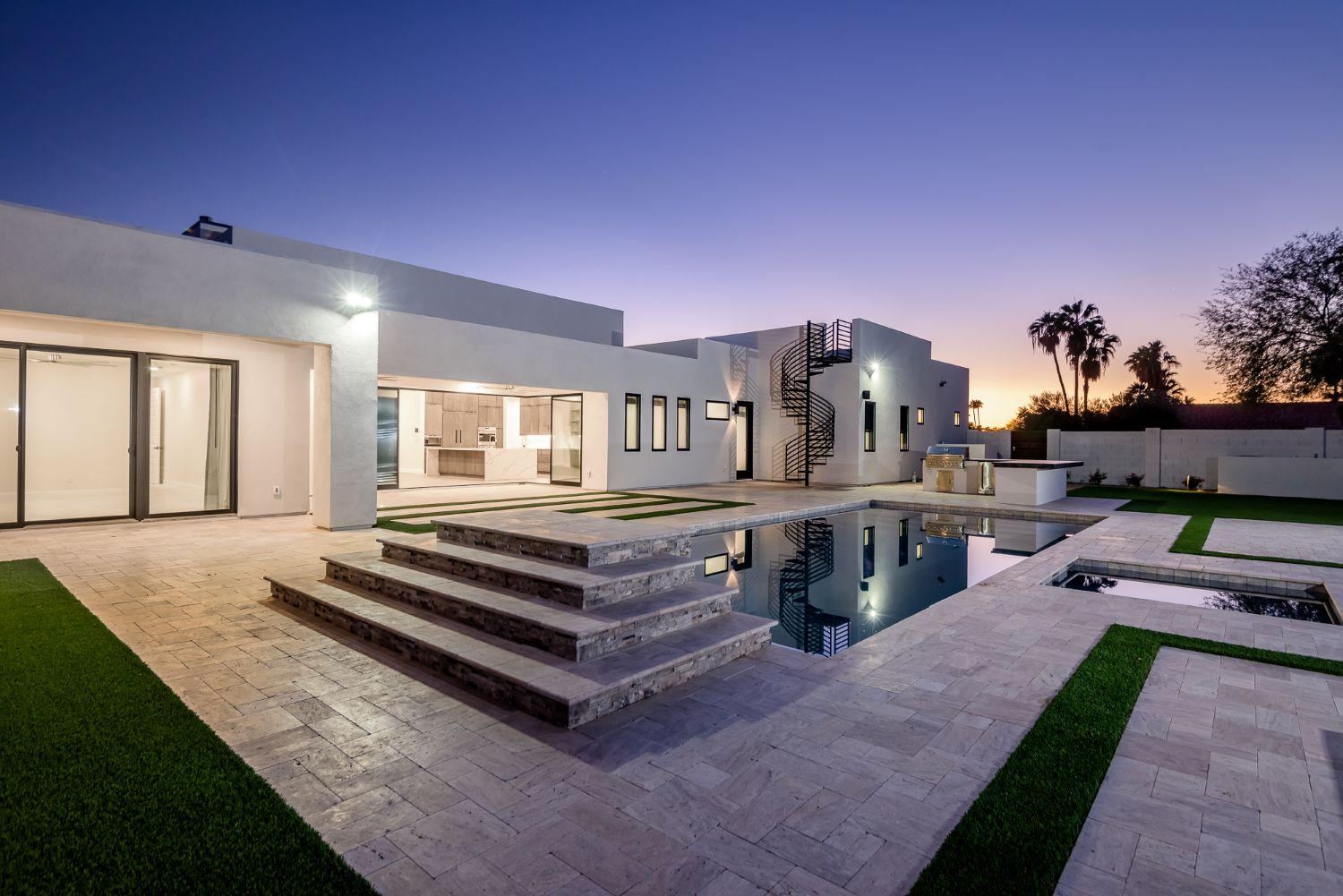
The answer depends less on the programs themselves and more on individual homeowner goals, plans for the home, and how much value formal third-party verification adds to a specific situation. Blue Sky Homes has helped homeowners across Scottsdale, Paradise Valley, and Arcadia work through this exact decision when considering green building certification options for their own projects.
Here’s a practical framework for deciding whether pursuing formal certification makes sense for you.
Consider Your Timeline in the Home
If you plan to stay in your home for many years, the case for pursuing green building certification Arizona programs offer becomes less about resale value and more about your own long-term comfort and utility savings, which you’ll benefit from directly regardless of formal certification.
If you anticipate selling within a few years, documented certification may carry more weight with future buyers evaluating your home against others on the market. When weighing Green Home Certification Pros and Cons, your expected ownership timeline should therefore be one of the first factors you consider.
Consider Whether You Need Third-Party Verification
Some homeowners want the reassurance of independent testing and documentation that comes with formal certification, particularly if they’re less familiar with construction and want objective confirmation that performance claims are accurate.
Others are comfortable working with a builder whose track record and process they already trust, without requiring formal verification for their own peace of mind.
Consider the Specific Program’s Focus
Not all green building certification Arizona options measure the same things. If energy performance specifically is your primary concern, a HERS rating may be the most relevant metric. If you care about a broader range of factors, including water efficiency and material selection, programs such as the National Green Building Standard or LEED for Homes may align more closely with your priorities.
Understanding this distinction helps clarify which certification, if any, actually serves your goals rather than pursuing documentation simply for the sake of having it.
Consider the Marginal Cost and Effort
Because Blue Sky Homes already builds around many of the same fundamentals certification programs measure, including high-performance insulation, air sealing, and correctly sized mechanical systems, the marginal cost of pursuing formal certification may be smaller than homeowners expect.
This makes the decision less about whether sustainable construction itself is worthwhile and more about whether the testing, verification, and documentation add enough value for your specific situation.
Consider Your Local Market
In some markets, formal certification carries more recognition among buyers and real estate professionals than in others. Homeowners in competitive, efficiency-conscious neighborhoods across Scottsdale, Paradise Valley, and Arcadia may find that pursuing green building certification Arizona buyers understand and value provides an additional marketing point when it’s time to sell.
Market recognition should still be evaluated alongside the other Green Home Certification Pros and Cons rather than treated as a guaranteed return on investment.
Situations Where Certification Tends to Make Sense
Certification is often worth considering when a homeowner anticipates selling within a few years, wants independent verification for personal confidence, or is building in a market where certified homes carry recognized value among local buyers.
Programs also differ in what they verify. The RESNET HERS Index focuses on a home’s energy performance, while the LEED residential program considers a broader range of sustainability factors.
Situations Where Skipping Formal Certification Is Reasonable
Homeowners planning to stay long-term, who already trust their builder’s process and track record, and who are less focused on resale marketing may reasonably choose to build with the same underlying performance standards without pursuing the additional documentation and certification process.
That does not necessarily mean giving up energy efficiency or sustainable construction. It simply means separating the performance of the home itself from the decision to have that performance formally verified.
How Blue Sky Homes Supports Either Path
Whether or not a homeowner ultimately decides to pursue formal green building certification Arizona programs offer, Blue Sky Homes applies the same Smart & Green Building fundamentals to every project.
Our team can also walk homeowners through specific certification requirements when they choose to pursue them, integrating testing and documentation needs into the design and construction plan from the start.
For homeowners considering broader third-party standards, the National Green Building Standard provides another framework covering areas such as energy efficiency, water efficiency, materials, indoor environmental quality, and site considerations.
Why This Decision Doesn’t Have to Be Complicated
The Green Home Certification Pros and Cons ultimately come down to what formal verification adds to your particular project.
Blue Sky Homes has earned recognition as Best Sustainable Builder in Arizona for two consecutive years by applying consistent performance standards regardless of whether formal certification is pursued, giving homeowners the flexibility to choose the path that fits their goals without compromising on quality either way.
Still Weighing Your Options?
If you’re comparing Green Home Certification Pros and Cons for your project, start with your long-term plans, performance goals, need for independent verification, and the value certification may carry in your local market.
If you’re trying to decide whether certification makes sense for your home, contact Blue Sky Homes to discuss the specifics of your project. You can also call 480.900.7202 or visit us at 4455 East Camelback Rd, D275, Phoenix, AZ 85018.
Let’s talk about what makes sense for your home and your goals.